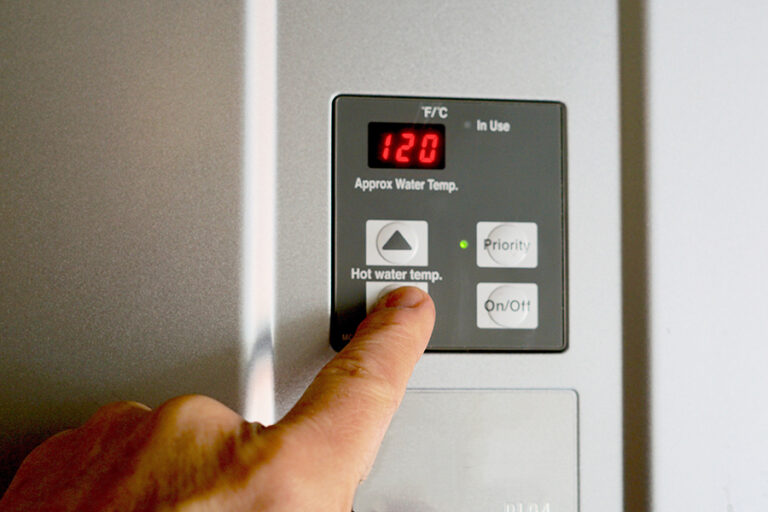
How hot is too hot when it comes to your water heater? For most homes, it’s recommended to set water heaters to 120 degrees Fahrenheit. Still, there is no single setting that works for every household. The best temperature for a hot water heater depends on who lives in your home, how much hot water you use, and whether you need to balance comfort, safety, and energy savings.
If you have ever wondered at what temperature should a water heater be set, this guide will walk through the most important factors to consider. Below, we will cover the recommended water heater temperature, why your setting matters, how to check and adjust it, and when to call a professional for help.
What Is the Recommended Water Heater Temperature?
For many households, 120 degrees Fahrenheit is a practical starting point. This water heater temperature setting is often recommended because it provides hot water for daily use while helping reduce the risk of scalding and improving energy efficiency.
That said, some homes may need a slightly higher setting. If you have a large household, a standard dishwasher without a preheating feature, or someone in the home with a suppressed immune system, you may prefer a higher temperature. In those cases, some homeowners raise the setting to 130 or even 140 degrees Fahrenheit, depending on their needs.
The right answer depends on your household. A lower setting may be safer for young children and older adults, while a higher setting may support sanitation and help hot water last longer.
Why Water Heater Temperature Matters
Your water heater setting affects more than just how hot your shower feels. It can also affect safety, sanitation, energy use, and your home’s overall comfort.
Safety and Scalding Risk
If your water heater is set too high, the risk of burns goes up quickly. This is especially important in homes with infants, young children, and older adults, who tend to have more sensitive skin. Water that is too hot can cause injury in just a few seconds, which is why many families prefer to stay closer to 120 degrees Fahrenheit.
Bacteria and Water Quality Concerns
If someone in your home has a suppressed immune system, your water heater temperature may also affect sanitation. Water that is stored at a higher temperature can help reduce the risk of harmful bacterial growth in the system. In some homes, that makes a setting closer to 140 degrees Fahrenheit worth discussing with a plumbing professional.
Comfort and Hot Water Supply
Your setting can also affect how long your hot water lasts. In a larger household, raising the water heater temperature setting slightly may help stretch your available hot water because less hot water is needed to reach a comfortable shower temperature. That can make a noticeable difference when several people are showering, washing dishes, or doing laundry around the same time.
Can Lowering Your Water Heater Temperature Save Energy?
Yes, lowering your water heater temperature can reduce energy use in some cases. Water heaters often account for a meaningful share of household energy consumption, so even a small adjustment may help. In general, lowering the temperature by 10 degrees can save about 3% to 5% on water heating costs.
Still, savings on energy bills should not be the only factor. If the setting is too low, you may run into comfort issues, sanitation concerns, or frequent complaints about not having enough hot water. The goal is to find a setting that balances efficiency with your household’s real needs.
Factors To Consider Before Changing Your Water Heater Temperature
Before changing the thermostat, think about how your household uses hot water every day.
Household Size
Larger households usually need more hot water. If several people shower back-to-back or you regularly run the dishwasher and washing machine on the same day, a higher setting may help your supply last longer.
Age of Household Members
Homes with young children or older adults often benefit from a lower setting to help reduce the risk of scalding. If safety is your biggest concern, starting near 120 degrees Fahrenheit is usually a smart choice.
Immune System Concerns
If someone in your home has a suppressed immune system, sanitation may be a bigger priority. In some cases, homeowners may choose a higher temperature to reduce bacterial concerns in drains and showers.
Dishwasher Type
Some newer dishwashers heat water internally to the proper sanitizing temperature. If yours does, there may be less reason to increase your water heater setting. If it does not, you may want to consider whether a slightly higher temperature would better support cleaning performance.
How To Check and Set Your Water Heater Temperature
If you are not sure where your water heater is set, checking it is a good first step.
How To Check the Current Setting
Some water heaters have a thermostat dial with exact temperature numbers. Others use settings like low, medium, and high. If you cannot tell what the current setting means, check the manufacturer’s information for guidance. For electric units, you may need to remove an access panel to reach the thermostat.
How To Adjust the Temperature Safely
Make small changes instead of major jumps. If you are starting from scratch, 120 degrees Fahrenheit is a reasonable baseline for most homes. From there, increase the setting in five-degree increments if needed. Small adjustments make it easier to find the best temperature for your hot water heater without overshooting.
How Long To Wait Before Testing a New Setting
After adjusting the thermostat, give the system time to heat the water to the new temperature. Then test the water at a faucet and pay attention to how it feels during normal use. If the water is still not meeting your needs, you can make another small adjustment.
Water Heater Maintenance That Helps Maintain the Right Temperature
Even the right water heater temperature setting may not solve the problem if your system is not working properly. Routine maintenance helps your water heater perform more consistently and can prevent sudden temperature issues.
Sediment buildup inside the tank can affect heating performance and reduce efficiency. Thermostats can also wear out over time, which may cause inconsistent water temperatures. If your unit is older, regular service becomes even more important.
This is also a good time to watch for leaks. Even a small leak can affect performance and lead to bigger problems if it goes undetected. If you notice unusual moisture around the unit, water leak detection can help identify the source before it causes damage.
If your system is struggling to maintain the right temperature, professional water heater repair may be the best next step. If you have a tankless unit, we also offer tankless water heater repair.
When To Call a Professional for Water Heater Temperature Issues
Some water heater problems go beyond a simple thermostat adjustment. It is time to call a plumber if:
- Your water is suddenly much hotter or colder than usual
- The temperature changes from day to day
- You run out of hot water too quickly
- You notice signs of leaking around the unit
- Adjusting the thermostat does not fix the problem
In these situations, the issue may involve the thermostat, heating element, sediment buildup, or another part of the system. A professional inspection can help determine whether you need repair, maintenance, or replacement.
Is a Hot Water Tank Booster Worth It?
A hot water tank booster can be a helpful option for some households. This device allows water to be stored at a higher temperature inside the tank while mixing it with cold water before it reaches your faucet. That means you may be able to keep the tank at 140 degrees Fahrenheit for sanitation while still getting water closer to 120 degrees at the tap.
This can be especially useful for homes that want to balance safety and bacteria control. If you are trying to meet the needs of both young children and immunocompromised family members, a booster may be worth asking about.
Trust Davis Plumbing for Water Heater Help
If you are still not sure what temperature your water heater should be set at, Davis Plumbing can help. We provide water heater services for homeowners throughout Burlington County, Cherry Hill, Delran, Cinnaminson, and Mount Laurel. Whether you need maintenance, repair, or help troubleshooting inconsistent hot water, our team is ready to help you find the right solution for your home.
Frequently Asked Questions About Water Heater Temperature
What is the recommended water heater temperature for most homes?
For most homes, the recommended water heater temperature is 120 degrees Fahrenheit. This setting offers a good balance of safety, comfort, and efficiency.
Is 140 degrees too hot for a water heater?
In some homes, yes, 140 degrees is too hot. A setting of 140 degrees Fahrenheit can increase the risk of scalding, especially for children and older adults. However, some households may choose a higher setting for sanitation or hot water supply needs.
Can lowering my water heater temperature save money?
Yes, lowering your water heater temperature can reduce energy use. In many cases, dropping the setting by 10 degrees may save around 3% to 5% on water heating costs.
How do I know if my water heater is set too high?
Your water heater may be set too high if water feels dangerously hot at the tap, if someone in your home has been scalded, or if the water temperature seems higher than expected even during normal use.
Why does my hot water run out so fast?
Hot water may run out quickly because of a low thermostat setting, sediment buildup in the tank, a failing heating element, or a water heater that is too small for your household’s needs. A plumber can help identify the cause.